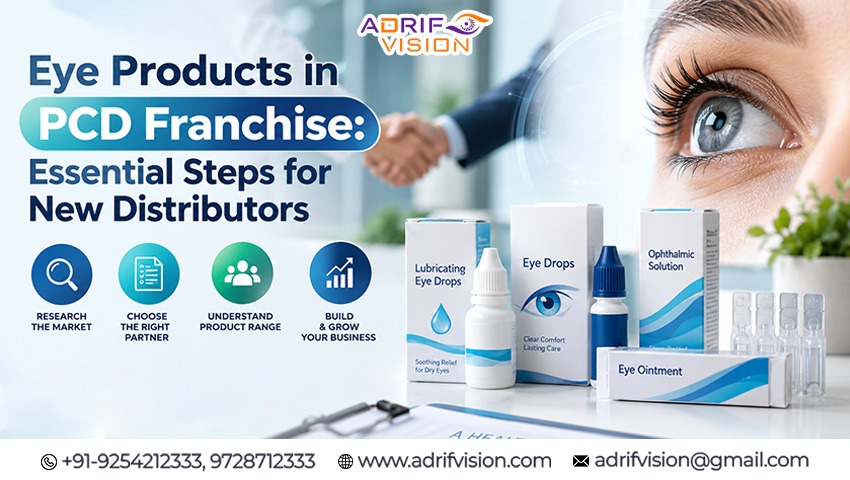
Opportunities to be an entrepreneur in the pharmaceutical field are vast especially in the niche medical markets. Out of various healthcare business models, Eye Products in PCD Franchise has become a very profitable and effective business. The need for sophisticated ophthalmic preparations like eye drops, eye ointments and lubricants is exploding as more and more people spend more time in front of screens, live in urban areas, and get older. This blog explains the key considerations for new distributors who are entering the specialty ophthalmic pharmaceutical distribution sector.
Understanding the Ophthalmic PCD Business Concept
It is essential that one has an understanding of the workings of a Propaganda-Cum-Distribution (PCD) model in the eye care industry before moving onto distribution networks. The distinguishing characteristics of an Eye Products in Pcd Franchise are that the regional partners are able to market and distribute pharmaceutical formulations under the monopoly rights of the parent brand, unlike traditional manufacturing setups. The eye is a very sensitive organ, and the ophthalmic segment must be handled with care, produced under sterile conditions with exact formulations.
Market Research and Legal Compliance
To make an entry in healthcare, it is important to prepare thoroughly, organise and license correctly. The legal permits need to be obtained before any medical drugs are traded.
- Obtain Drug Licenses: Acquire both wholesale and retail drug licenses from the local state food and the drug control authorities.
- Goods and Services Tax Registration: Apply for the Goods and Services Tax registration to conduct business activities within the legal framework.
- Study Local Demand: Do comprehensive market research to pinpoint high demand the formulations, local competitors and the health care practitioners who are well known in your target zone.
Selecting a Reliable Pharma Partner
The reliability and quality of your manufacturing partner supporting your supply chain is critical to your success. A reliable company will guarantee that products are of good quality and that customers will trust the company.
- Verify Standards of Manufacturing: Make sure your partner product meets all WHO and GMP requirements for control of quality.
- Evaluate Product Portfolios: Check if they have various products and catalogues such as those for antiglaucoma agents, lubricants, antibiotics and the surgical aids.
- Evaluate Monopoly Rights: Select the companies that have exclusive rights to distribute products across certain regions to reduce intra-brand competition.
Establishing Distribution Networks and Marketing Strategies
With your inventory and the partnerships in place, the next step to growing your enterprise is to be proactive in promoting your product to doctors and pharmacies.
- Target Eye Care Specialists: Build professional relationships with the ophthalmologists, optometrists and the local clinic chains.
- Utilize the Visual Aids: Equip your marketing team with the high quality visual aids, product catch cover and sample kits.
- Ensure Integrity of Logistics: Ensure the temperature controlled storage and delivery to maintain the chemical stability of sensitive eye formulations.
Conclusion
For committed entrepreneurs willing to navigate through the regulatory and marketing landscape, healthcare distribution can be a thrilling avenue to explore. New distributors can establish successful business with knowledge and understanding of the industry, right license and by collaborating with established industry leaders. Success with Eye Products in PCD Franchise hinges on maintaining unwavering product quality, making strong medical relationships and delivering consistent customer service, much like the standards upheld by Adrifvision.
FAQ’s
Q1: Is previous pharma experience required for the new distributors?
Ans: Prior experience helps, but basic business acumen and dedication are more critical for success.
Q2: What storage conditions are required for eye drops?
Ans: The majority of eye drops need to be cooled and stored dry out of the direct sunlight for stability.
Q3: Are eye ointments distributed similarly to the liquid drops?
Ans: Yes, though they require equal attention to sterile packaging and temperature control during transit.
Q4: What is the role of R&D in ophthalmic products?
Ans: R&D guarantees safer and preservative free formulations and innovative delivery methods for patients.